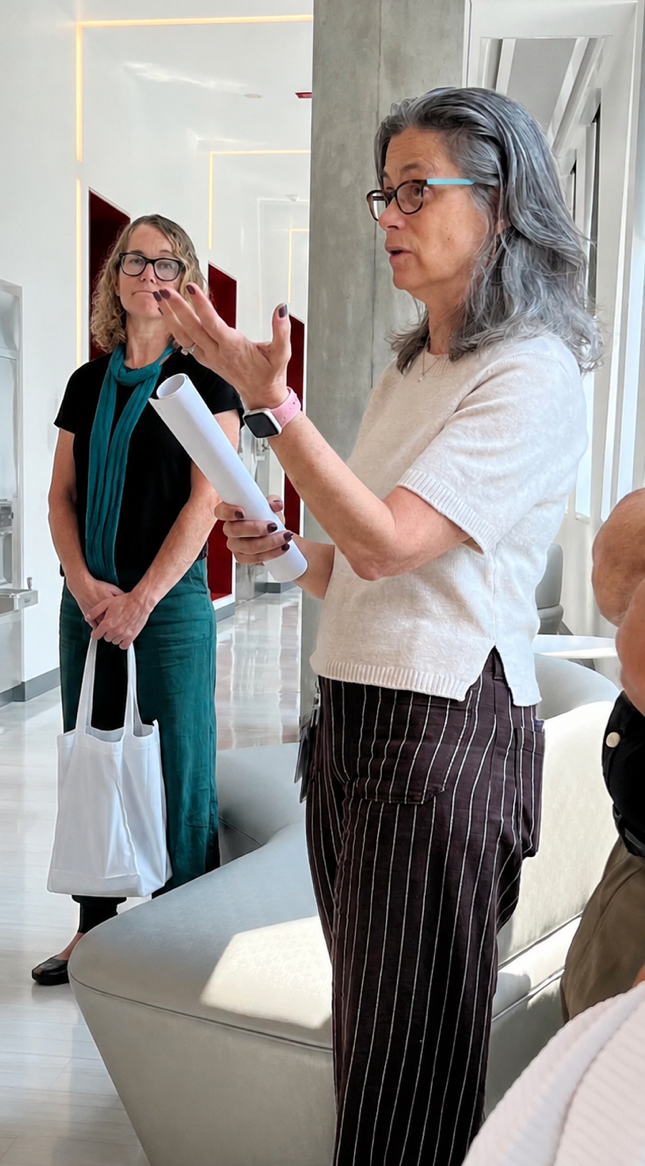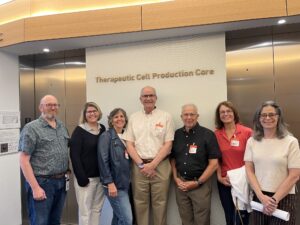
In August 2026, Friend for Life members and supporters were treated to a tour of the Dr. Delaney Lab.
Following is information on Dr. Delaney’s Adoptive Immunotherapy With Universal Allogeneic Natural Killer Cells Using cord blood from healthy donors to generate off-the-shelf CAR-NK cells to treat blood cancers and solid tumors
Technology Overview
Natural killer (NK) cells are among the first responders of the immune system. These cells have multiple functions in the defense against cells that are pathogenic due to viral infection or malignancy. NK cells secrete cytotoxins to selectively kill pathogenic cells and cytokines to coordinate the actions of other immune cells. NK cells can be engineered to be immunotherapy agents and express chimeric antigen receptors (CARs) against markers of infectious disease or cancer.
CAR-NK cells have distinct advantages over CAR T cells used for immunotherapy. Allogeneic CAR-NK cells do not require donor-recipient HLA compatibility and do not cause graft-versus-host disease (GVHD). In addition, CAR-NK cells do not overproliferate and release toxic levels of cytokines when activated, which eliminates the serious complications of many therapeutic CAR T cells such as neurotoxicity and cytokine release syndrome. The ability to treat patients without the need for HLA matching paves the way for off-the-shelf, on-demand clinical use of cryopreserved CAR-NK cells. However, CAR-NK cells are more challenging to generate than CAR T cells because NK cells are more sensitive to the genetic materials used in cell engineering.
Stem cell transplantation physician Colleen Delaney, MD, MSc, has the expertise to engineer NK cells. She led development of a low-cost, standardized, highly scalable system for producing clinically available NK cells from stem cells in umbilical cord blood. These undifferentiated cells arise from healthy donors and have low risk of exposure to external toxins and infectious agents. This work draws on Dr. Delaney’s decades of experience working with hematopoietic stem cells and treating patients. Read more about the Delaney Lab research